
Judgment is what the viewer expects from the beginning, though, as we see the recently deceased protagonist, Henry van Cleve, played by a marvelously deadpan Don Ameche, approaching the gates of Hell, where he believes he belongs. The movie consists of Henry's attempt to convince Satan, a very polite, tuxedoed gentleman, that he does in fact belong there, which he does by recounting his many sins. Henry was an inveterate playboy, a lazy, feckless, selfish man who was spoiled as a child and never really matures. He manages to attract the young heiress Martha Strable, played by a particularly radiant Gene Tierney, who becomes his wife and turns out to be kind, understanding, and wise, all attributes Henry seems incapable of attaining throughout his long life.
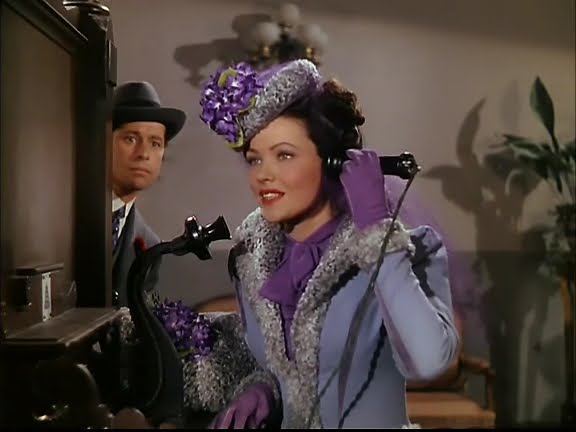
Nothing much happens in the film - there's little suspense or excitement, little melodrama - which I think might explain why a lot of people find it boring. I thought the film was enthralling, thanks to the gentle comedy and incisive depictions of human nature, (definitely helped by the superb actors - the film also features Charles Coburn as the grandfather everyone wishes they had, Spring Byington and Louis Calhern as Henry's overly indulgent parents, and, playing the parents no one wishes they had, Eugene Pallette and Marjorie Main, who play Martha's petty, constantly bickering progenitors). One of my favorite scenes involves the Strables, who do not get along, sitting at opposite ends of their looonng breakfast table communicating with each other through the butler, because they refuse to speak to each other. At one point, Mr. Strable asks for more hotcakes, receives a stack of like 12, gets more and more angry arguing with Mrs. Strable (through the gradually more flustered butler), then asks for fresh hotcakes with the previous stack sitting untouched on his plate. The scene is pure cliche, I suppose, but it really sparks to life thanks to the brilliance of the three actors involved.
Lubitsch understands that people are full of hidden yearnings and desires that they generally don't get a chance to express, and that these yearnings are a large part of what drives people in their day-to-day lives. Henry meets Martha because she is buying a book called How to Make Your Husband Happy in secret, a book that presumably includes information about sex as much as anything else. Later, after Henry finds out that Martha is engaged to his boring cousin Albert (who is such a stick in the mud that their grandfather secretly dumps a glass of water onto him from the second story of his house), Martha confesses that she wants to marry him not because she is in love with him but because she can't stand the thought of spending all of her life in Kansas with her bickering parents. And Henry's grandfather confesses to him, after Martha leaves Henry because he can't stop cheating on her, that he's always favored Henry because he lived his life the way he himself wished he could have lived it. Lubitsch shows that, even if Henry is a selfish, thoughtless person, he is not that different from the "good" people in his life. To be human is to long for the things of this world. Henry is different in that his impulse control is terrible, not because he wants to enjoy himself. And therein lies the heart of this easygoing comedy. It sides firmly with the fun-loving pleasure seekers of this world, which is really quite daring and unexpected for a film released while the world was at war. But then again, I'd expect nothing less from the director of To Be or Not To Be.
Martha, the moral compass of the film, ages into this understanding of human nature. In one of the most memorable scenes of the movie, Henry tries to figure out how much Martha knows about the affair their 20-something-year-old son is having with a showgirl. Henry was so nervous about the whole thing that he paid off the woman to stay away from their son, but Martha already knew all about the affair and is not at all disturbed by it. "These things have a way of working themselves out," she tells him. Henry responds by condescending to her, telling her that she's still "the innocent little girl from Kansas" because she feels confident everything will work out for their son. When Henry asks her what she expects will become of their son, she responds that he'll likely end up "just like you, with a girl like me" - which is, of course, exactly what happens. The scene reverses expectations by making the mother the one who is unperturbed by her son's dalliances and the father the one who is concerned by them, and the film as a whole endorses Martha's easygoing attitude, as the ending makes clear. Death and sorrow lurk in the background of this movie, as nearly all of the main characters have died by the end of Henry's long life, but the overall tone of the film is light and gently humorous, an effect that the film's gorgeous Technicolor emphasizes. The bright shades of blue and red from Henry's youth fade to more sedate tones of baby blue and lavender as he ages, lovely still, but much less likely to force their mode of existence on their viewers.
Comments
Post a Comment